Education

BioBus Laboratory Education


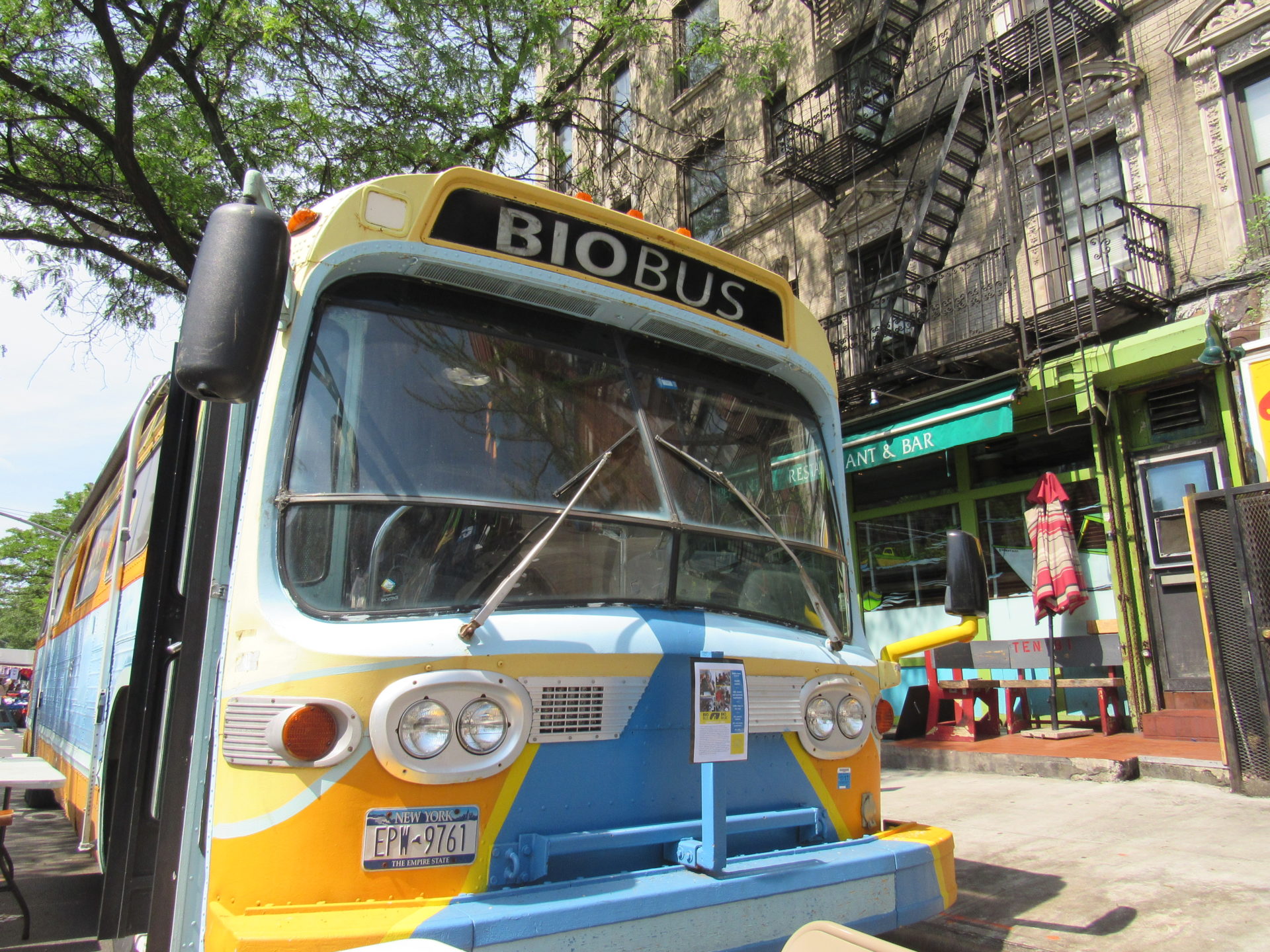
The BioBusThe BioBus (www.biobus.org) is a multi-dimensional platform for inquiry-based science education. From Biology to Physics to Chemistry to Earth Science, students’ interest in science is energized after boarding our green-energy-powered, research-grade microscope lab. All classes are based on city, state and national educational standards, while preparatory and follow-up lessons allow you to fully integrate the BioBus into your classroom. BioBus scientists develop a customized course to suit your students’ needs, and each class can operate in any one of our three operational modes: Adventurers (over 100 students per hour), Explorers (a class of up to 30 students for 1 period) and Discoverers (groups of up to 20 students for 60 minutes or longer). Classes can be modified to appeal to any age from kindergarten to high school to adult education. Contact us today by email (ric@biobus.org) or phone (917 569 8926) to bring the BioBus to your school, museum, community center, or festival, or start the process right now by going here: www.biobus.org/2009/09/inquiry-request-form/

Key Features of Every BioBus Laboratory Experience:

  • Led by Ph.D. level scientists
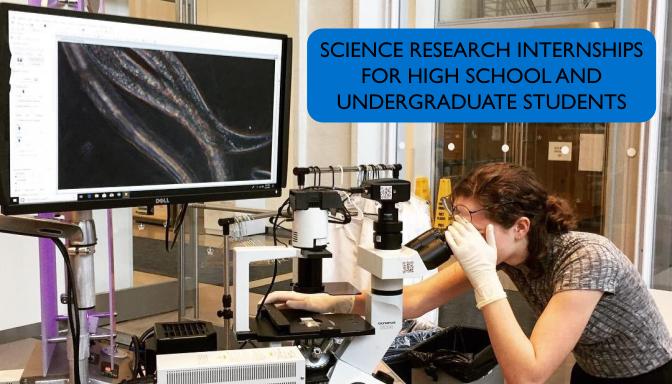
  • University-level microscope laboratory in front half of BioBus
  • Data analysis and computer classroom in back half of BioBus
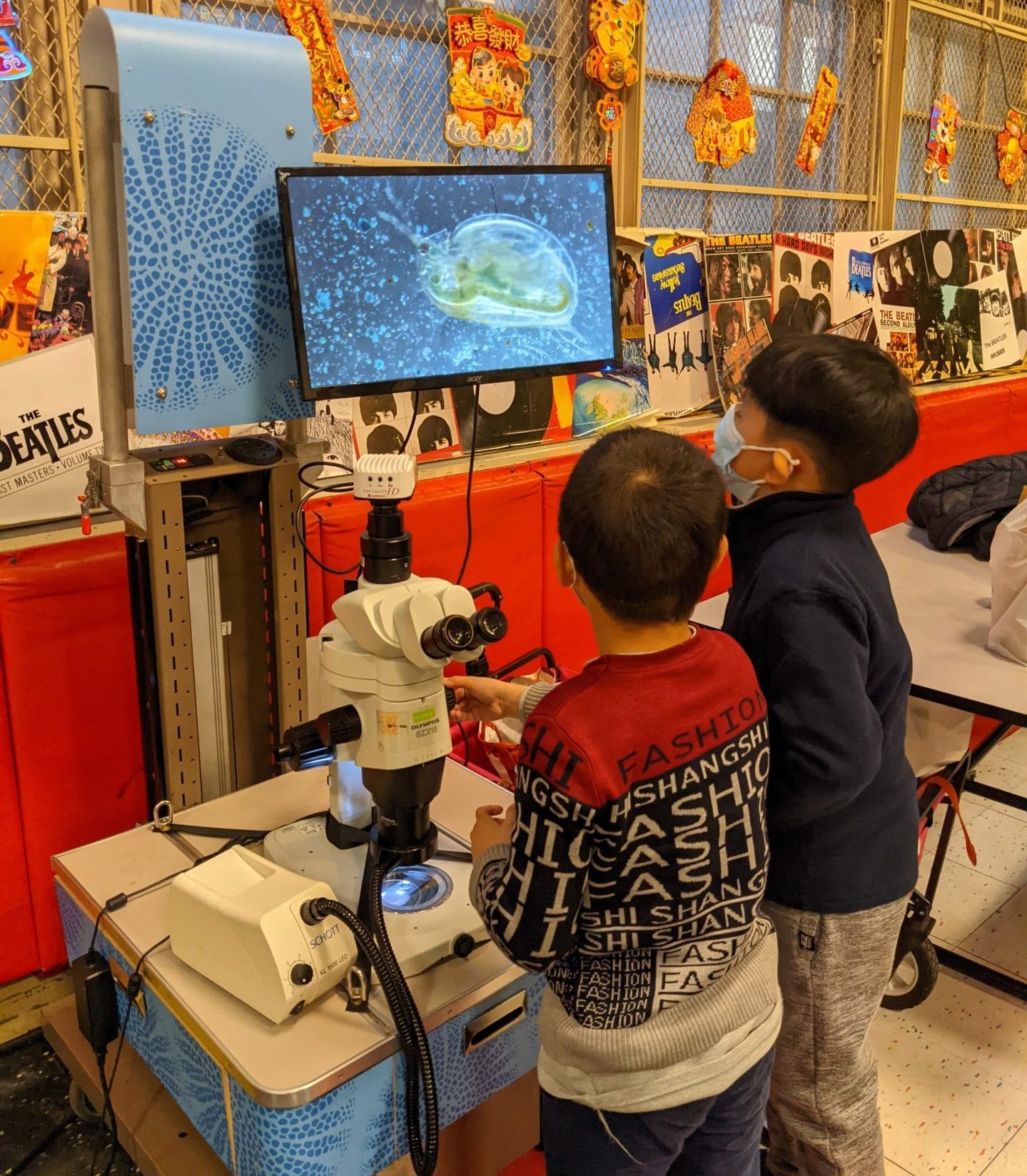
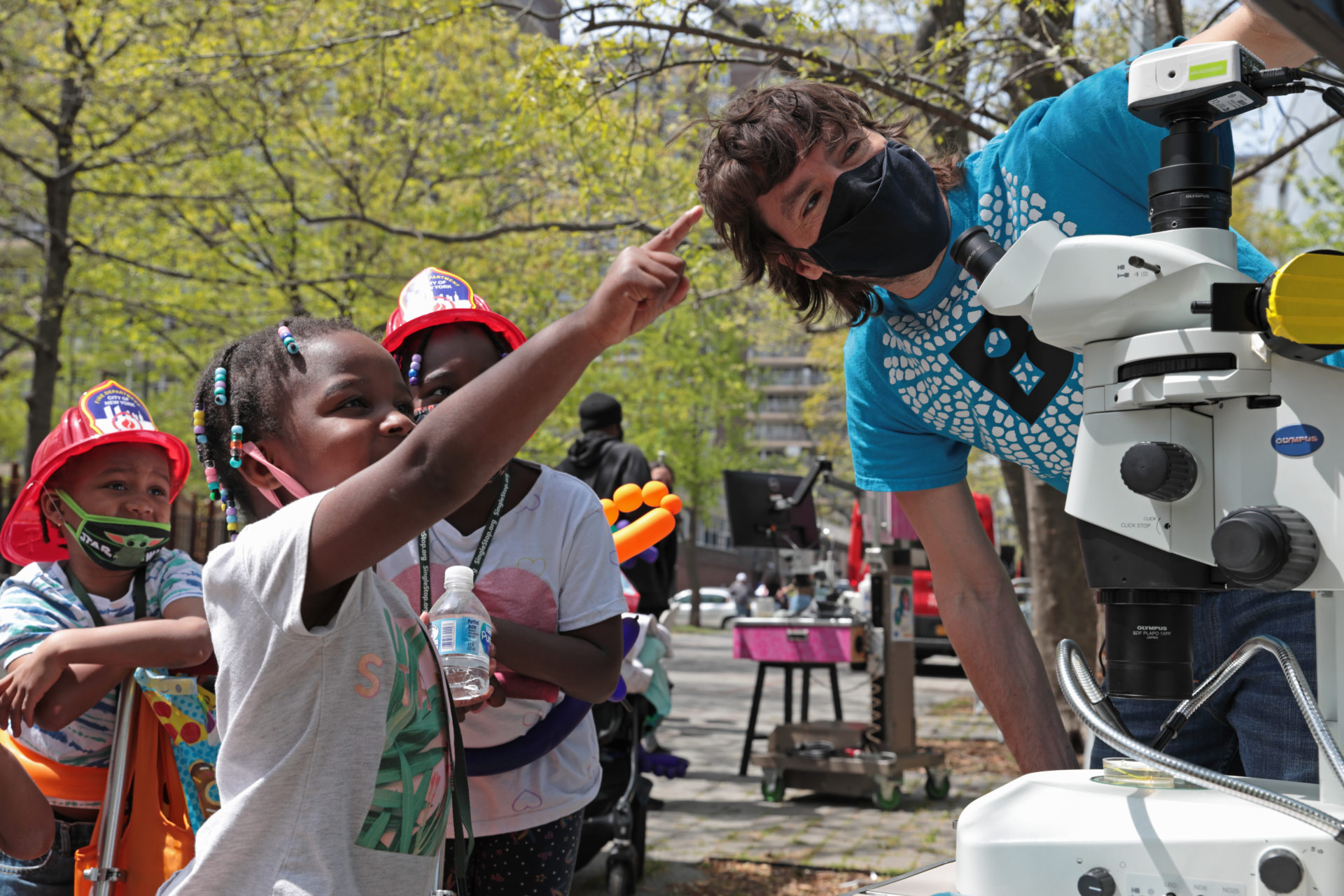
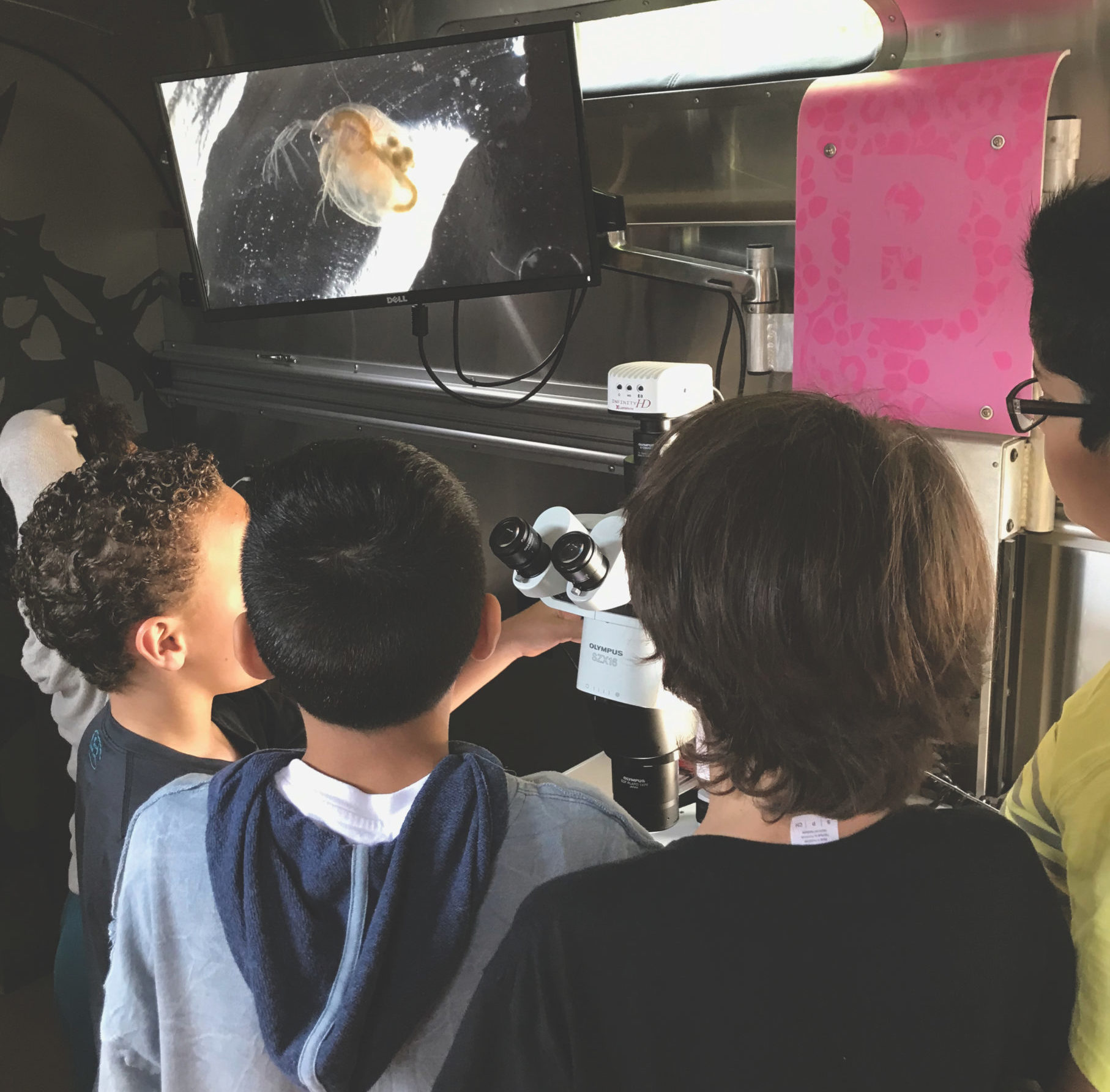
  • Microscope cameras and monitors keep all students engaged in discovery
  • Content is matched to educational standards and your curriculum
  • Preparatory and follow up materials provided
  • Students save data for exploration in the classroom and beyond
  • Students eligible for our science mentorship program
  • Kid safe and fully insured
  • BioBus is 100% carbon neutral, powered by solar, wind, and bio-fuels
Flourescent 'ScopeComputer LabBee Looking at Bee

BioBus Class Listing

Biological Building Blocks (Biology / Ecology)

The BioBusExplore the building block of all life. Using our high-powered microscopes, students experiment using protozoa, plants, and their own cheek cells, exploring the structure, function, and beauty of the cell. Lab techniques include sample collection from the local environment, preparation of wet-mount slides, live cell video microscopy, and fluorescence microscopy where students can view individual organelles and DNA. Students analyze their data in our computer lab, and take the data home with them for further exploration.

Dear Daphnia (Biology / Ecology)

Daphnia magnaExplore the inner workings of Daphnia, a shrimp-like animal collected from ponds and puddles across NYC and the country. This millimeter-long crustacean has a transparent shell, allowing students the unique opportunity to observe the inner workings of a live animal, including a beating heart, twitching nerves, contractile digestive system, and more. Students can use Daphnia as a model system to study the effects of neurotoxins on the rate of Daphnia’s beating heart. Ecology students will study Daphnia’s use as an indicator for environmental pollutants.

Hot Hot Hot (Physics & Chemistry)

A Still Life of Brownian MotionWhat is temperature? While we all experience hot and cold, a good physical definition can be elusive – except on the BioBus. Students inquire into the nature of temperature by recording thermal vibrations in microscopic particles, a phenomenon called ‘Brownian Motion’ that was described by Einstein over 100 years ago. Students test their hypotheses by changing experimental variables such as viscosity, temperature, and particle size. In our computer lab, they reinforce concepts of atoms, molecules, energy, molecular bonds, and phase transitions, and test their understanding by analyzing particle motion data on the computer.

Watching Paint Dry (Physics & Chemistry)

Tiny PaintWho knew watching paint dry could be so much fun! This normally boring activity springs to life under the microscope, illustrating concepts such as suspensions, colloids, phase transitions, and crystal formation. Students move on to explore the interesting properties of other materials, observing the globular proteins and structures in milk (not really a liquid!), creams, and gels. A collaboration with the Materials Research Science and Engineering Center at New York University, this particular (pun intended) module is a fun, hands-on way to teach concepts of physics and chemistry and inspire our young scientists.

Battle of the Blade (Biology / Ecology)

On every leaf, a high-stakes battle for survival unfolds under the microscope. Students explore how plants defend themselves against marauding insects and pathogens by observing how they build homes for predatory insects, secrete noxious chemicals, build thick walls, and close off their entryways. Concepts explored include symbiosis, parasitism, mutualism, adaptation, and evolution. These experiments will give students a new appreciation for the complex ecosystems in every plant and tree around us.

Energy and Climate Change (Earth Science / Physics)

The BioBus is a 100% carbon neutral facility, and provides students with a hands-on, working example of alternative energies. Students explore the solar panels and wind-turbine that provide all of our electricity; learn about how our engine runs on waste vegetable oil; and explore the trade-offs between plant-based heating like our wood-burning stove and gas based heating. Using this array of alternative energy sources as a starting point, students explore concepts of energy, earth, and the environment, and learn how the human use of fossil fuels is linked to global climate change through the ‘green house effect.’ Additional concepts include the relationship between plants and animals, alternative energy sources, the carbon cycle, the water cycle, fossils, and geological strata formation.


web development by Halla Design creative consulting by J.Yuen J.Yuen